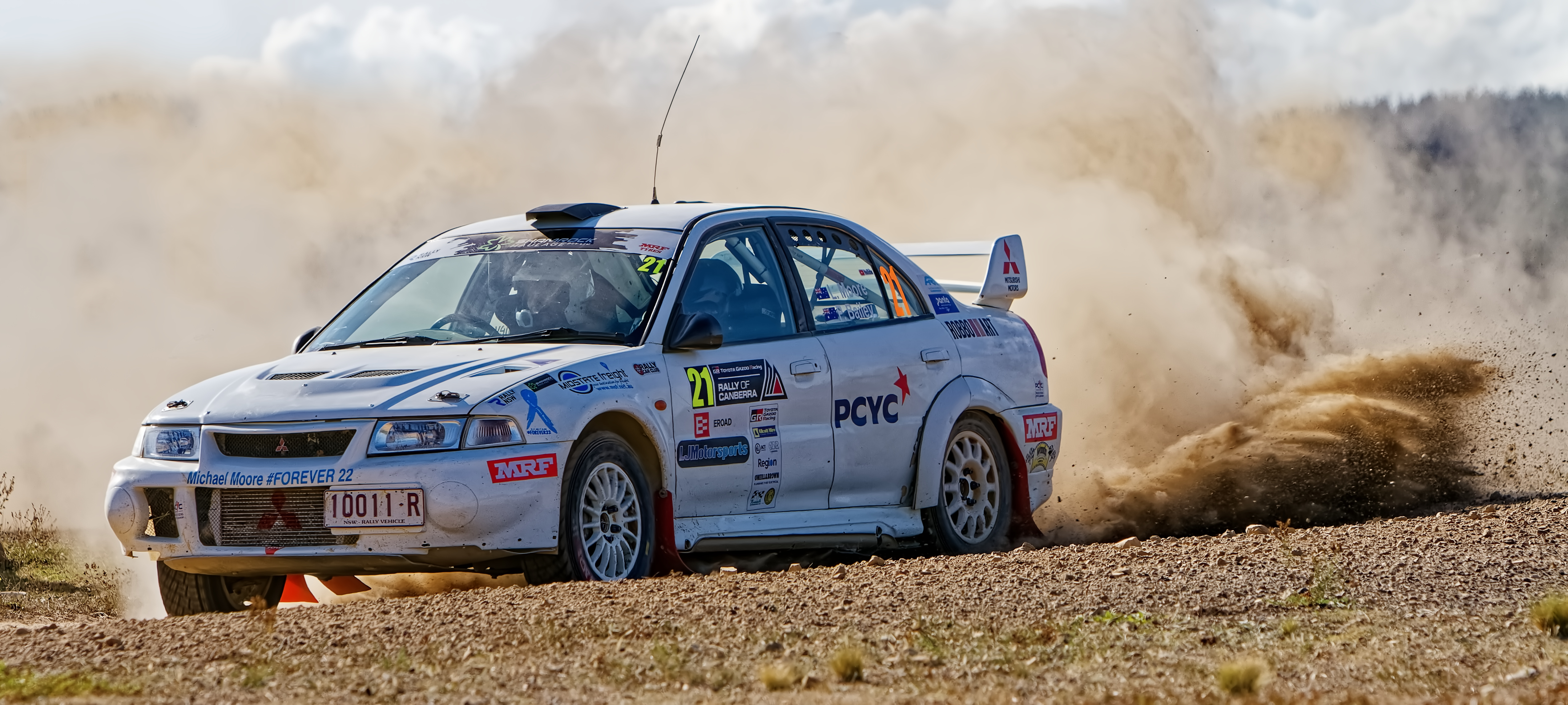
Rally car races are fun, but challenging....
Ren and I are not what you'd call "motor heads" by any stretch of the imagination. That said, when we decided to take "a few pics" at the Canberra Rally, we really weren't sure what to expect. Simply because we had never been to one before.
Now obviously, there's going to be cars, dirt roads, and we knew from the web site that it was in the middle of a state forest. In fact, there were multiple state forests, depending on which event "tickled your fancy", and when you could spare the time. Honestly, I was expecting tree-lined dirt roads and various spots along the course that we could go to....
Au contraire! Yes we were in the middle of the forest, but the only viewing area had been cleared of trees. There was no tree to be had for shade, anywhere near the track. To make taking a good shot worse.... all along the course were tons of concrete barricades and propaganda/ads... and by the time the race was underway, we were facing the shady side of every car that went past... which poses certain photographic challenges, particularly if the race ran late and the afternoon sun wore on.... and guess what....Alas, almost every team had suffered some sort of accident or mechanical issue, so the earlier event/location ran longer than what we might've expected. (See the back wheel, and how the cowling is coming loose?) So basically, we turned up, about three hours early, because we didn't know precisely when things were "kicking off", only that the web site said "12-5pm", but it really didn't get started until 3pm or so.
That said, I was thankful, because we managed to camp out in what was probably, one of the best vantages in the general public's viewing area. Each 30 minutes that passed, seemed to double the number of people arriving compared the the previous half-hour. In the last hour, the entire barricade was filled and it was "standing room only". In the last half-hour.. that front row was now six-to-ten people deep. Everyone had to bring their own chairs... and we had to make a choice.. fill the car with camera gear or camping gear.. but we couldn't do both. The car was parked about 800m away and even if we could have made multiple trips, we were not going to sacrifice our hard earned prime real estate.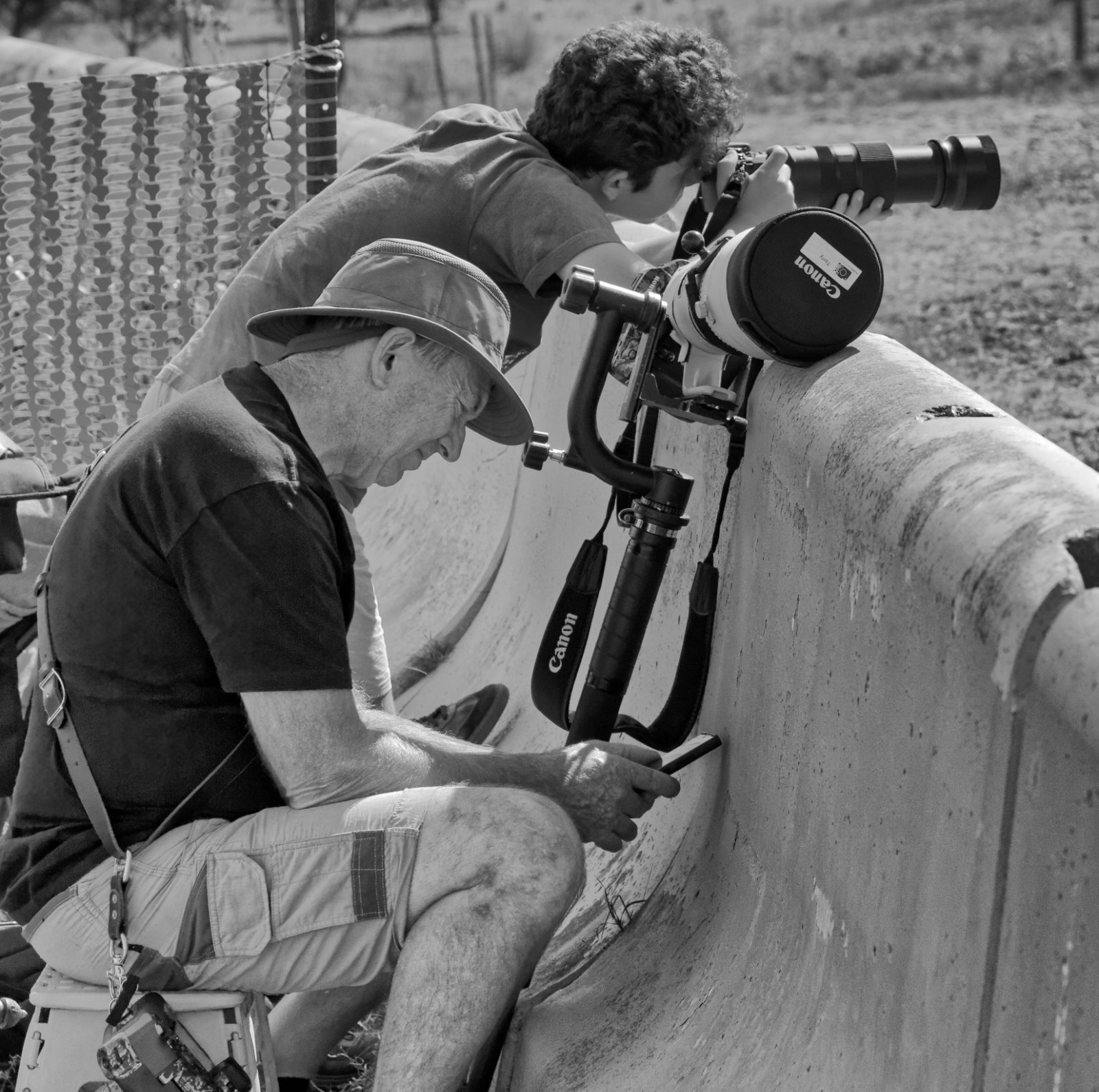
If in doubt, go where all the fancy equipment and well-prepared photographers set up!
Look, we had no idea what to expect or even which direction the cars would be travelling. So we wandered along the barricade rail (being early) and camped not far from where the serious rigs could be found.
Everyone, meet Terry, he gave Ren his business card, and he's the founder, CEO and primary photographer of his company of several photographers. In case you're not sure, he's the guy in the foreground with the big lens on a monopod. You can always tell a pro by the fact they sit down & take it easy during quiet moments. They're often there well in advance, well prepared with spare bodies strapped to them, the expensive gear is set up, but reasonably protected, and always at hand should something happen.
See how empty this place is? This is hours before anything of note happened. I just wished I didn't lose my hat on an a previous shoot!
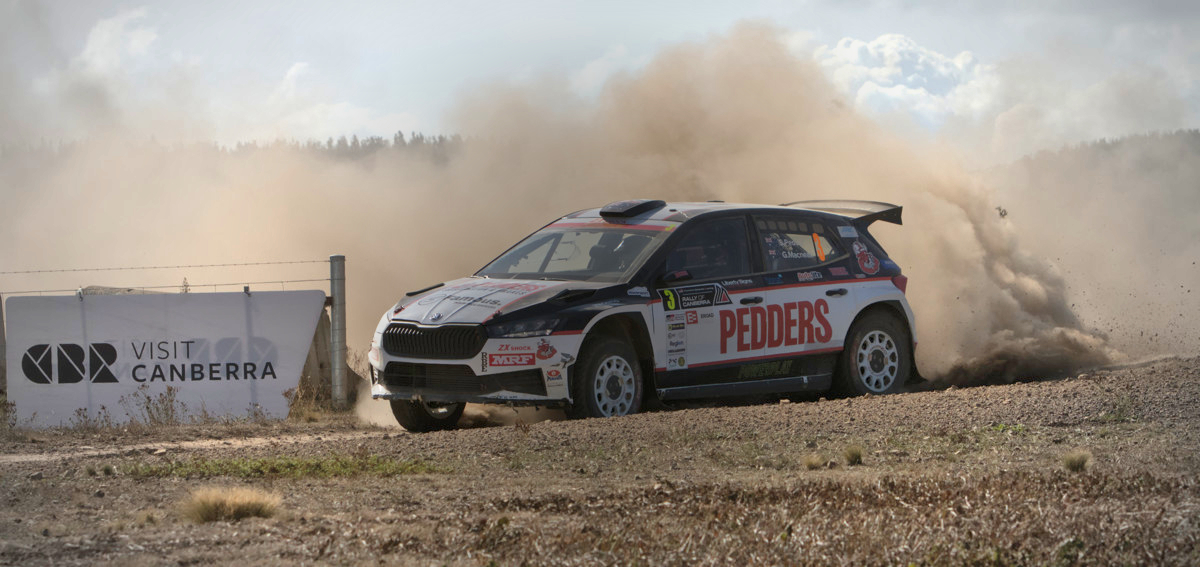
Remember about that propaganda I was talking about?
I had a bit of trouble when the dust clouds didn't obscure the ads for me. So sometimes, I just ran with it because it does say where this rally was, afterall. Do I like it in my shot? Not at all. But it 's better people in fluorescent (high visibility) vests....
Now, you might think that motor sports photography is all shots and videos of this right? Then over to the podium for the victory shots, and finally, we're all off to find a much needed dinner.
I'm afraid it's not quite that glamourous! Especially when the weather is bad, delays occur, and other "unforeseen events" cloud the issue.
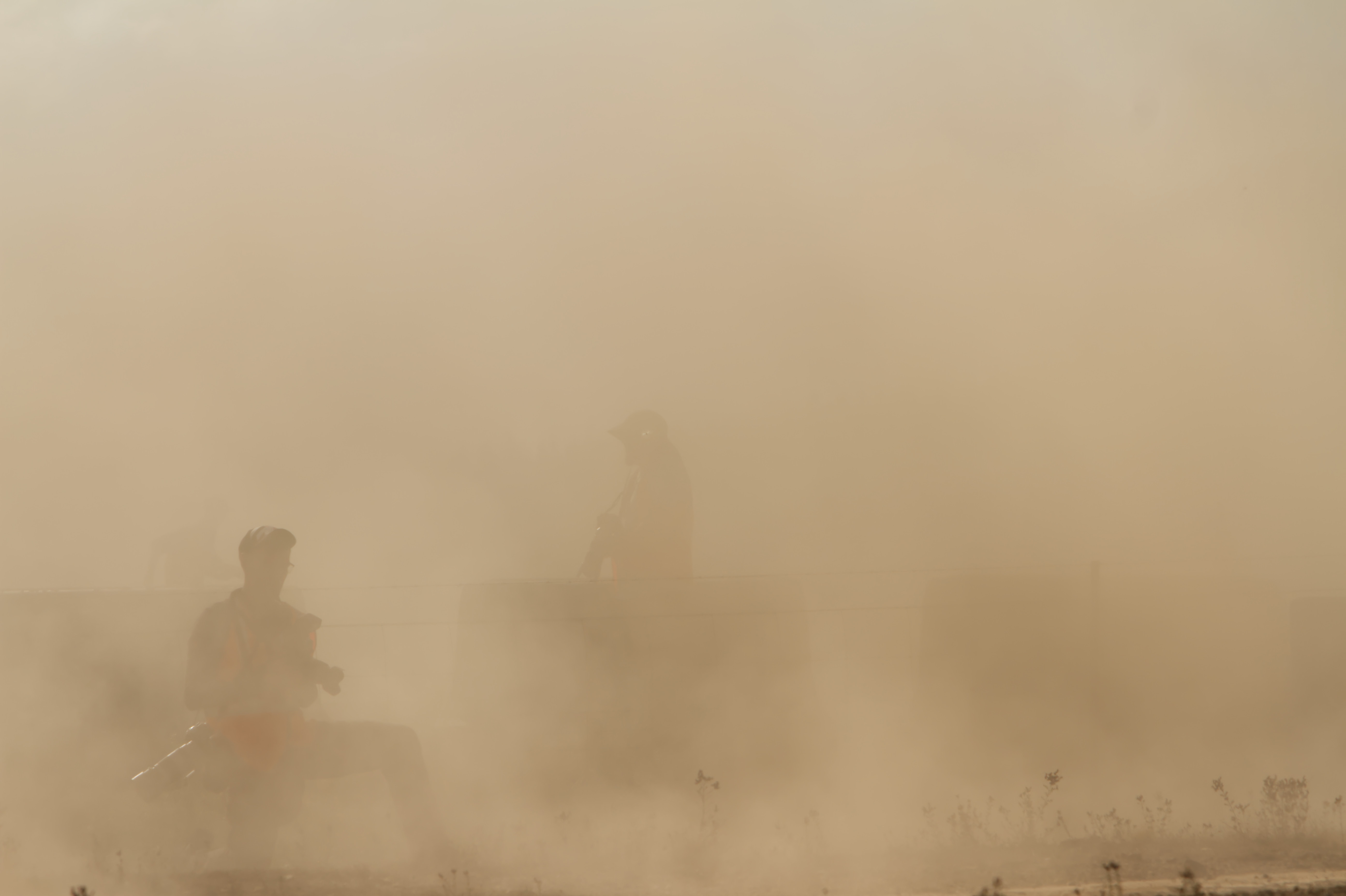
It may not be glamourous, but you certainly get a feel for the action.
Oh wait, there's the high-visibilty vest people.... <insert sigh here>. Maybe I can do something useful with it. Let's see...
Even the pro's and official photographers, despite getting the ability to pick their favourite vantage... have to consider how much dust both they, and their cameras can take after each car races by.
It's actually kind of funny, here the official photographers were, taking photos of the cars as they sped by the crowds. (It's a more interesting background that what we had to work with, I assure you). Yet here I was, on the other side of the road, in the sea of crowds, taking photos of them choking on the dust. I didn't do this to be spiteful, but more to show Ren's dad (who is a motor head) just how close we were to the action, and that it came at a price. Since Ren has been starting her photography business, (admittedly, not paid to shoot the rally this time) she's has at least demonstrated the commitment to tolerate inconveniences to get a decent portfolio together.
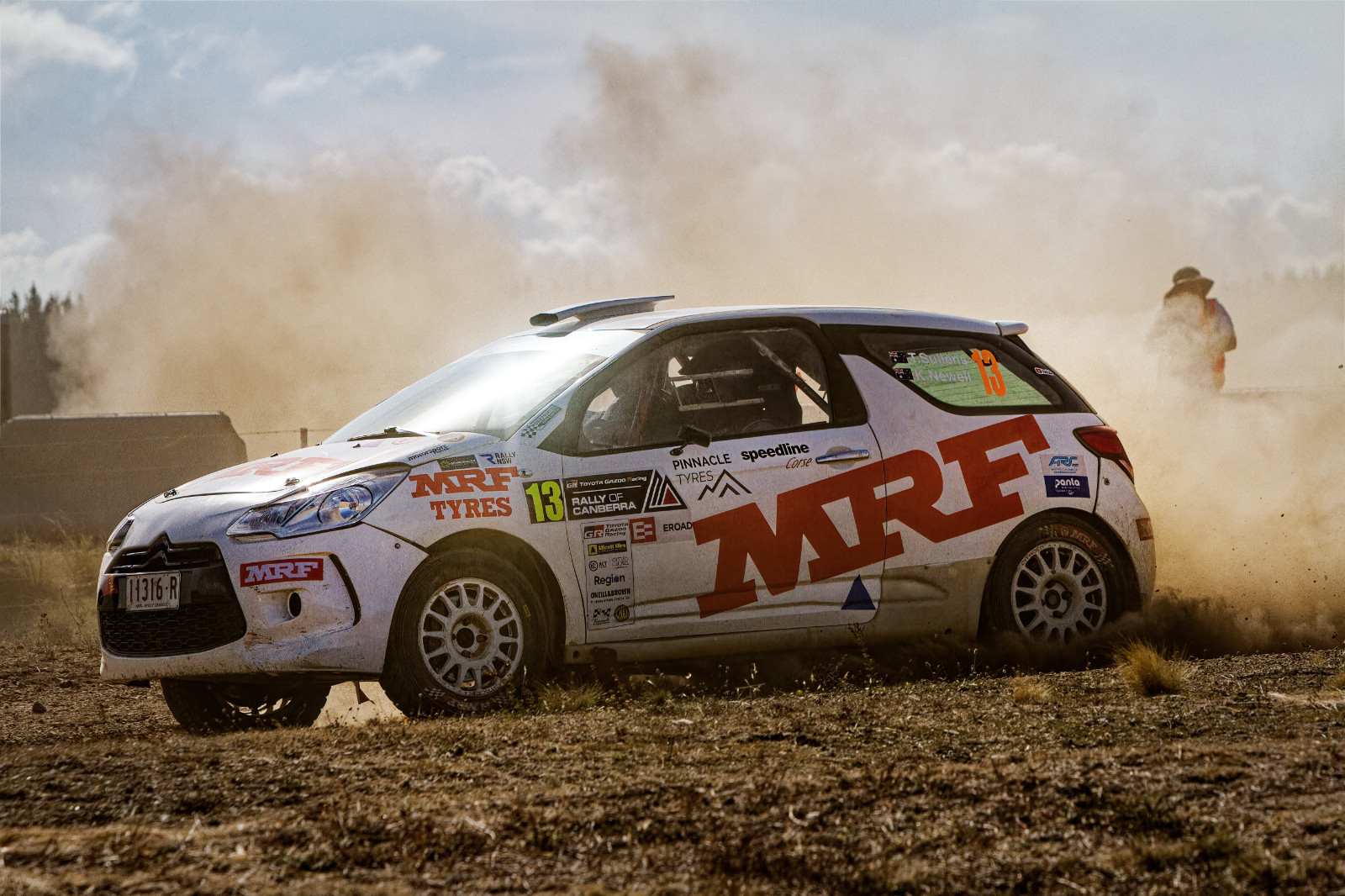
This one is not my favourite image, but...
I like how dirty this car was getting... there's literally rivulets of dirt and grime. Clearly this went through some water at some point. However, that grime is a two-edged sword. Yes, it tells a story... but..... it made the noise processing much harder to do. Unfortunately, I was limited to select areas of minor noise reduction in post.
I didn't actually want the photographer in my shot, nor did I particularly like the concrete barricade so I've used this as a fairly underprocessed image.
Honestly, I'm not quite sure where the brightness on the front side of this car came from... perhaps someone used a flash? Or it went past something white/light coloured?.... I honestly can only speculate.
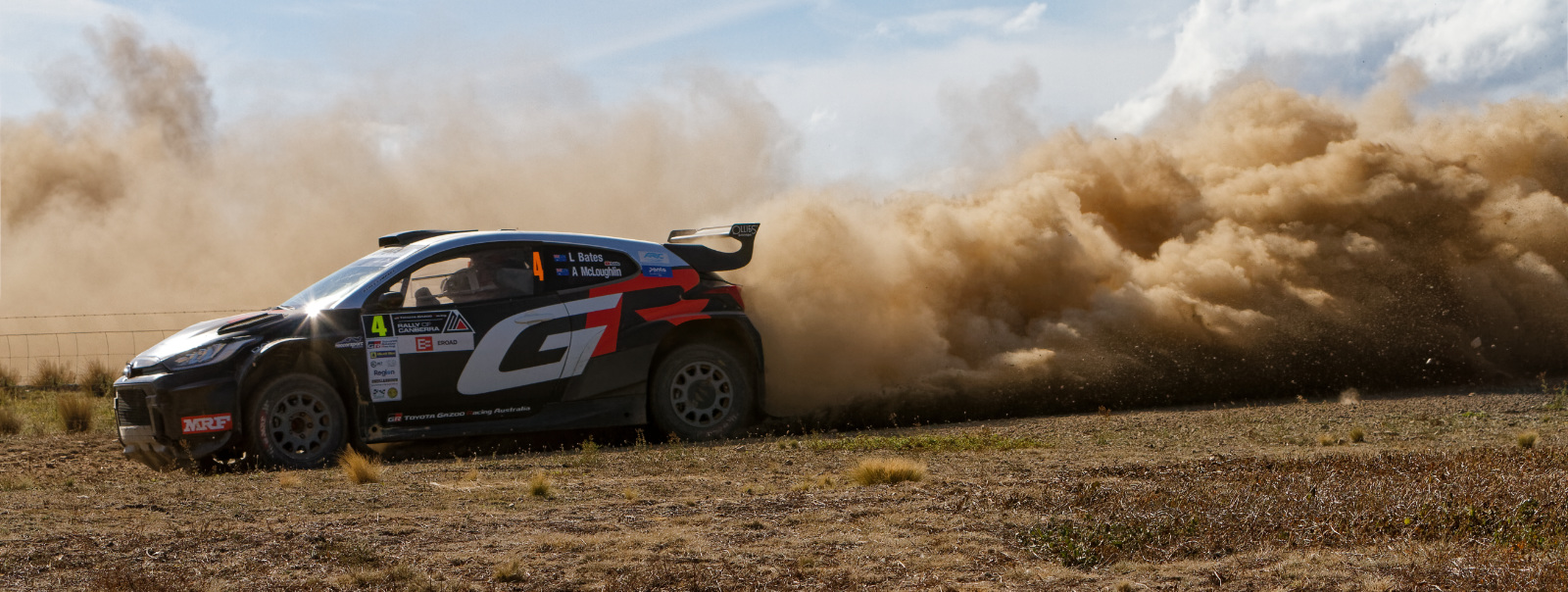
This is perhaps my favourite image.
Sometimes, there's so much dust, an that with a slightly different angle, you don't have to worry about the background at all. I think this is the winning car, and boy did this thing fly around the corner. I was using rapid fire at seven frames (shots) a second. The shot before this, the car was cut off on the right hand side, and the shot after.. the car was cut off on the left. Curiously, the crowd got a bit more "claustrophobic" and pressed in around me during this amazing fly-by. As I was panning, I found my range of movement greatly reduced because there were people close to me either side, and I didn't want to smack them in the face with my lens.
I think I did pretty well, all things considered!
For a cheeky comparison, have a look at an official, international motor-sport photographer shooting the same event...
So what gear was I using?
Well, it might shock you but I was using some pretty darn old equipment here.
While there were very serious photographers in the crowds of spectators, some armed with $10,000-$25,000 lenses (usually the 400mm F2.8, 500mm/600mm F4 primes with ultimate sharpness and the fastest autofocus and best image stabilization.... If they didn't have that, I saw one guy armed with the Canon 200-400mm F4L zoom lens, which still commands a $10K price tag). Naturally, most had the latest flagship or "pro work horse" models of mirrorless cameras dangling off the back of those lenses. (Probably another $5000-$9000 or so)
I was running a somewhat-different kit.
I actually used an original series, Canon 7D (released 2009) and my lens was a Canon EF 400mm F5.6L... which was originally released in (no joke) 1993. (I was in primary school then). So at this 2025 Canberra Rally, my lens used 32 year old tech, and my camera, half that age handicap at still substantial 16 years old.
In case you're wondering if it's some sort of limited edition, made with genuine exhorbitantium, and coated in un-obtanium, making it light-years ahead of it's time... I'm sorry to disappoint.
My lens can be bought on the second hand market for as little as $861 Australian, and my camera, is sold second hand/working for as little as $177.64 Australian. That's right, I ran a rig that barely cracked the $1000 mark, TOTAL!
Ok, sure, I could have used my better camera but I'd have lost my crop-factor's extra reach... I suppose you could say I'm still very "wayward".
Am I just trying to big-note myself at the expense of poor Dave Oliver? Not at all!
The entire point here, is not to devalue David, I honestly think he's very good actually, and I can see why he's successful. Similarly, it's certainly not to build me up either. It's to show you, dear reader, that you simply don't have to use the latest gear to get great shots... at least, not in the right conditions.
Time for a little honesty and expectation management:
I didn't get as many "pro level" shots as he did. I was a spectator, attended just one part of the event, and only had one spot to shoot from. He obviously had "back stage passes", went to all of the events. Even so, for every good one I got, he probably would get three perhaps even five... if all else was equal... He does this for a living, and I don't. If he wasn't good, he wouldn't be paid.. so respect where it's absolutely due.
Now, I don't want you get the impression that Dave got everything perfectly "in camera" and did no post processing. Of course he polished up his shots, and having looked at his shots, he's clearly used some creative "Finagling", to enhance the image with a sense of speed through "motion blur", even if the method he used would not have captured it as presented.
How did he do that?!
A bit of linear motion blur for the background, a bit of rotational motion blur for the wheels is how he got things so sharp while blurring everything else in his panning shots. This is as simple as duplicating layers, applying blur selectively, and masking the bits out that you don't want.
You can't deny the results though.
So can you just buy any old camera gear and get great results?
Ok, while it's true that I've owned this gear for years and used it extensively. (So much so, I replaced the shutter when it wore out, I think I have 300,000 ish shots on the 7D, or a bit under 20,000 shots per year. That sounds like a lot, but if you do extreme macro photography where I average 200-2000 stacked images to make one picture... it kinda adds up.
My gear isn't new, but I've dragged this gear to all manner of environments from snowy mountain peaks, sandy deserts, misty rainforests, tropical islands, and cities around the world. I've done more bird photography than I can poke a stick at. I've done air shows, sporting events, concerts, and even weddings with this gear. I know the quirks, the flaws, the limits, and the ideal circumstances to use this stuff. In short, I've just gotten accustomed to it and made many mistakes along the way. You will too.
A beginner who just bought this gear will need time to master it... and there's no shiny new systems to make it quite as easy as newer gear would be. But it is absolutely possible if you're willing to put in the effort!
While I'm here... my kit works well in full daylight conditions, but as soon as it gets dark, my equipment here will not keep up with the newer and much more expensive kits. I don't want to mislead you, dear reader. Ultimately, I just used my gear in a favourable conditions where it'd likely produce a good result.
That said, there's simply no denying that newer gear will focus faster, have better/more intelligent autofocus systems, better image stabilization, wider dynamic range, and probably more pixels to work with, making images sharper, or capable of significant cropping without losing too much detail.
In short, technology has moved on since I got my old gear... and despite the insane prices new cameras command these days, you're getting a very powerful tool for that money. Whether that has a justifiable price to benefit ratio for you... only you can decide that!
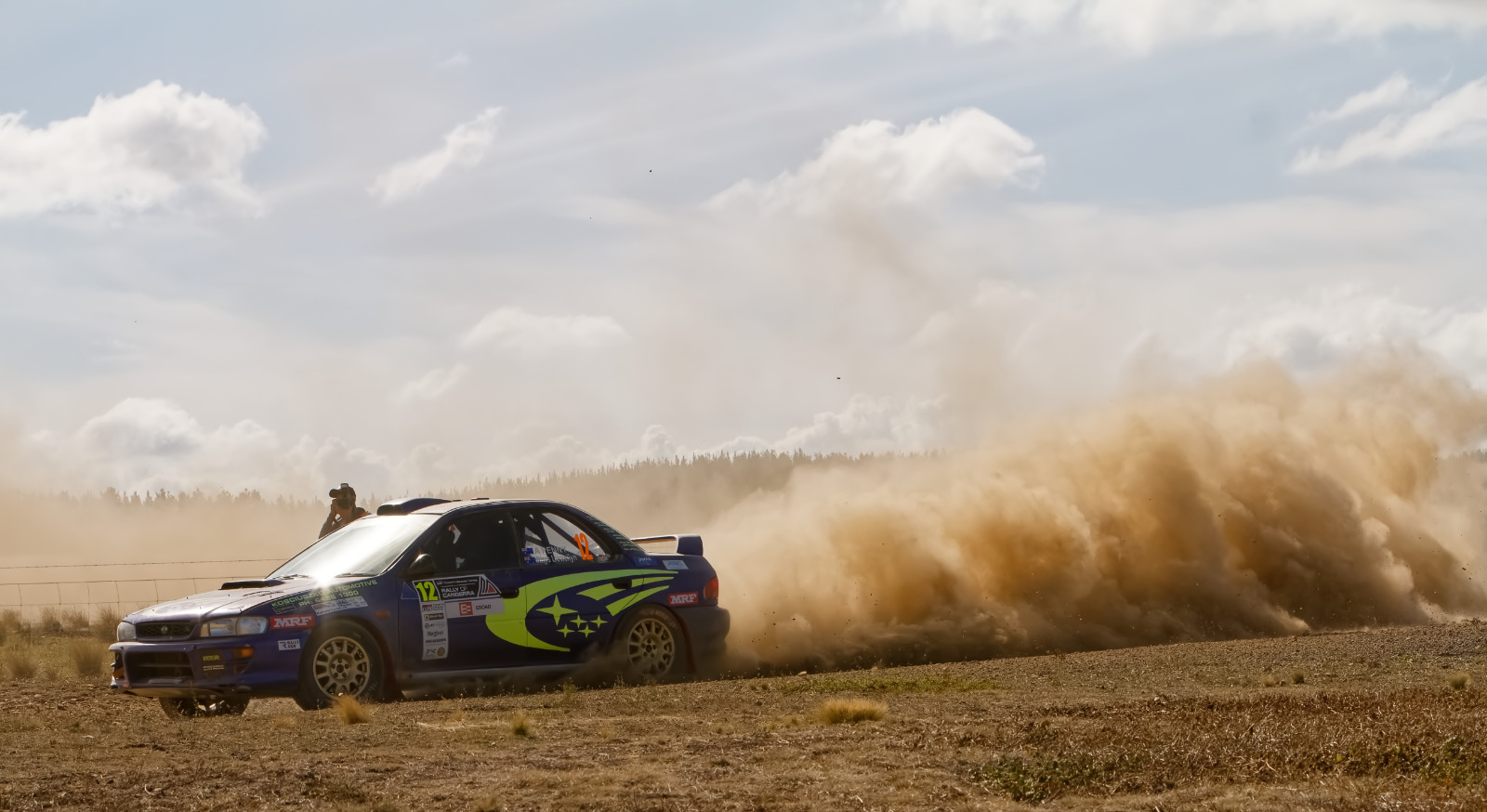
Bloody reckless photographer should be driving!
Ok, so this obviously only looks like the photographer is sticking his head out of the window. However, in the previous car's pass, he was positioned further along the road (and thus out of my shot).
Imagine my frustration when he pops his head up just before my shot. These photographers are a pain, how dare he exist! (Kidding). I'm sure he's probably saying the same thing about me.
Why did I leave him in?
Because this sort of thing happens "on site". Preparing for everything else, navigating to the event through the forested wilderness, keeping the dust out, and off the lens, and trying to protect your little patch of ground from the masses... then this "Jack in the box" photographer pops up at the key moment.... Sigh.
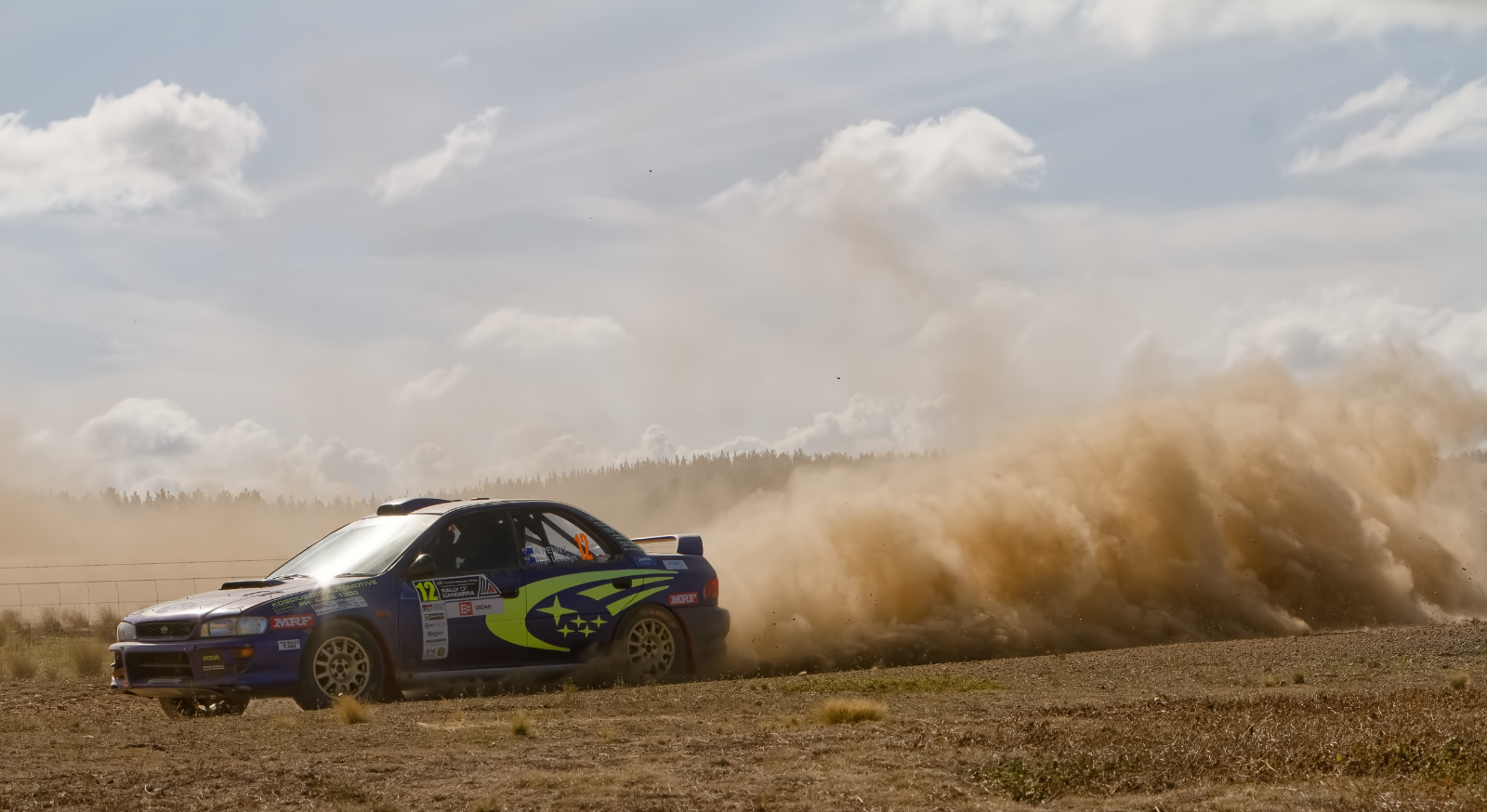
Let's try this again without the photographer!
Ok, so I had to get a little bit creative with my post processing, but I got the photographer out of the scene without using AI generated tools.
It might be a less distracting image without the photographer that seemingly "popped" out of the driver's window. I'd even go so far as to say that it's technically a better image, all else being equal. That said there's less quirkiness, and I actually got a laugh or two out of the previous version.
I still stand by the statement:
"Once you've covered the basics, and got something to work with, there's no such thing as right and wrong, only what's right for you!".
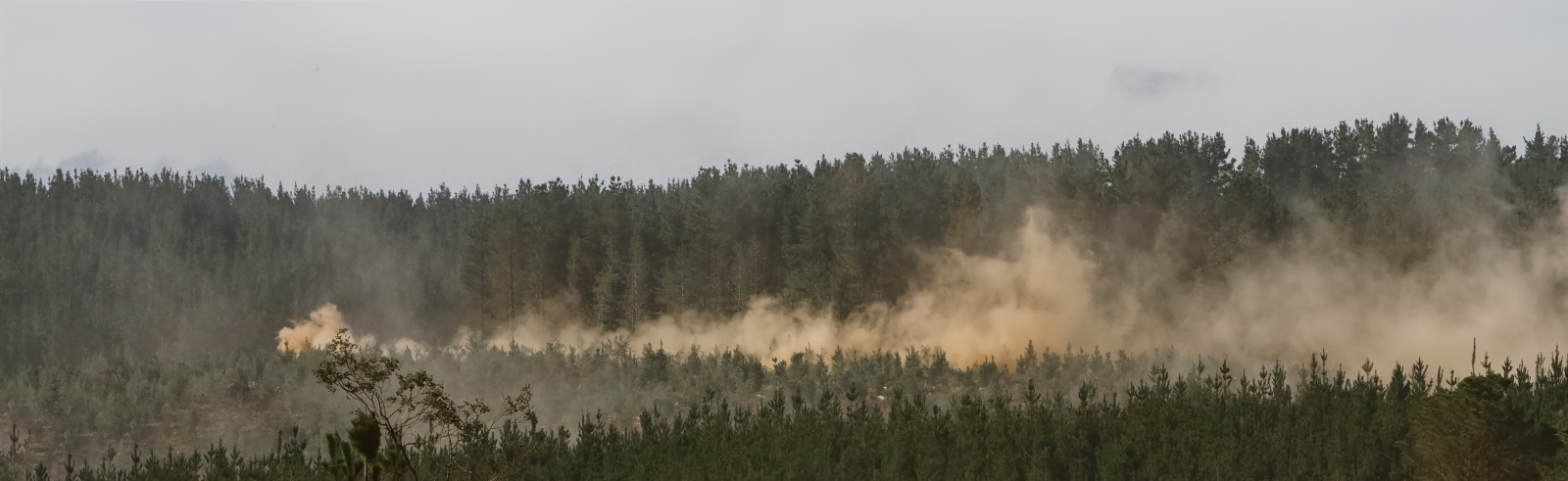
Telephoto lenses are no substitute for getting closer!
There are risks involved with any race running on narrow, unsealed roads at top speeds, and insurance isn't cheap! Consequently, the public is generally kept away from it all.
That said... given the noise of the motors, and the tell-tale sign that someone is out there kicking up a ton of dust... it's not hard to see the progress a rally car is making through the forest with a telephoto lens... even if you can't see the cars themselves.
This shot is obviously B-footage grade. It's not enough to be a feature shot, but it provides some of this forest that I haven't really shown much of thusfar. A lot of photography sites would skip this image because it doesn't have the wow factor.
Honestly, that would be like reading a story that only has the protagonist and antagonist. Everyone knows you need a few deuteragonists, (sidekicks), tertiary characters, foils, and other supporting cast to get a feel for the world it describes. I think images like this have a place and serve a similar function. So don't write them off before considering how you could use such images.
That said, it can be used as a small picture in a brochure or photo book, and add details around the flashier photos.
Back to this particular image:
I like this because from the very bottom left, you can follow the ridge line that obviously hides how the car drove to the right at first (the faint, largely dissapated haze suggests this), and once it hit that right edge of the image, how the car then followed the trail to the left, moving further up the hill, and how the cloud of dust get's increasingly concentrated until it rounds a corner of trees. Indicating where the car probably is.
However, compared to the closer shots shown above, long range shots just can't compete against getting the up-close details that always make images more compelling.