
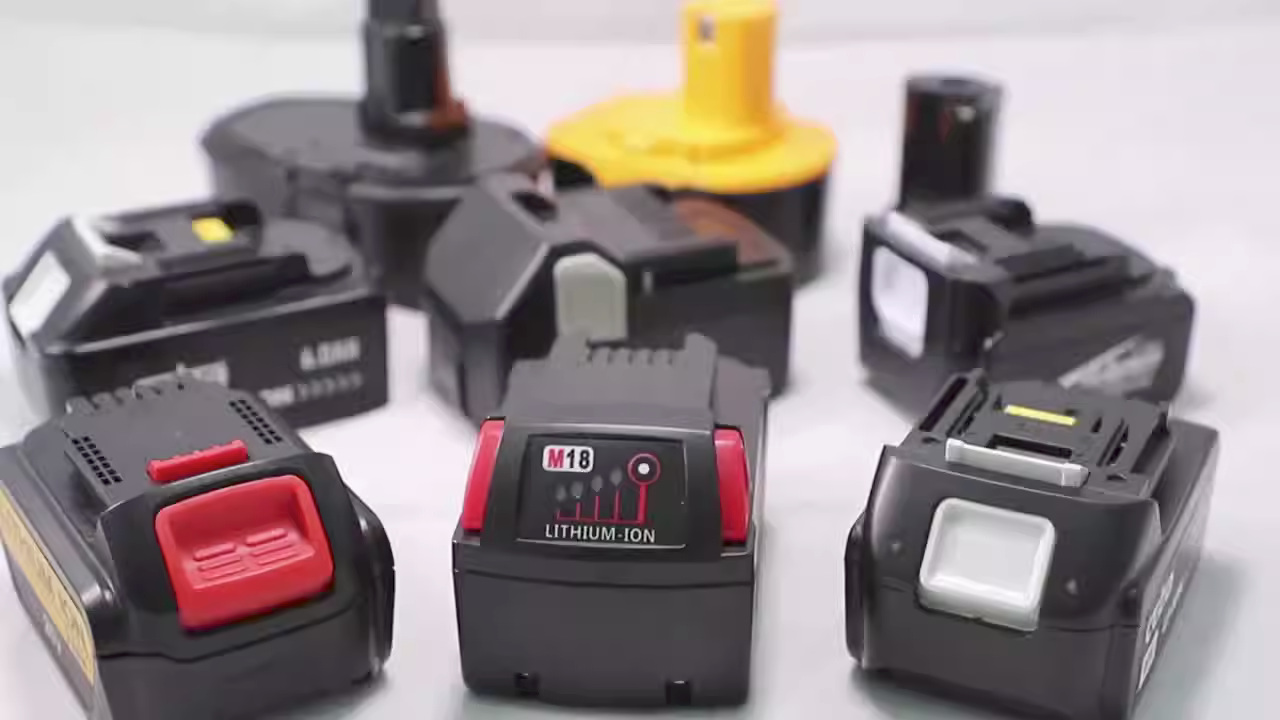
For years, cordless tools have been segregated in a number of ways, ostensibly to encourage or even force, a degree of brand loyalty, but that's changing....
Not all differences between batteries are apparent to the naked eye...
Sometimes it's the internal differences battery configuration itself, or the intervening wiring to different pins on the tool or battery, or even if it "looks right" but has subtlely different plug arrangements that prevent connecting the battery and tool.
Of course, there's also the varying voltages, usually something like 12, 18, 20, 24, 36, or 54V, which is usually clearly labelled, but don't go connecting a 54V battery to a 12V tool... because you won't have a tool, you'll have a burned out motor, and a tool-shaped piece of e-waste... if it didn't catch fire and melt.
The problems with having all these different batteries...
For years cordless tool owners have looked at a shiny cordless tool made by a different brand, or even... the same brand with newer series of battery, and been forced into a choice with three options:
- Wait and hope, for your particular brand of tool to make the tool for the batteries you have: Obviously unlikely if your series has been superceded, or if the brand in question has exclusive production rights to that shiny new tool. This was the case with oscillating tools when Fein had global dominance over the tech/design rights.
- Buy the cross-branded tool, while keeping your existing tools, and invest in yet another system of batteries and chargers. This is very expensive, takes up additional space in an often-cluttered workshop or tool box, and harder to manage. Not exactly ideal.
- Sell off/trade in all of your cordless tools and upgrade/switch teams: This is of course, the most expensive option, and even more obviously, assumes that the entire new set of tools is in fact better "across the board"... for each and every tool that you started with. This is rarely the case.
Obviously, that's great for the manufacturers, but not for the general public who might use these restricted tools.
Now, given that Lithium batteries are pretty much the basis of all cordless tools, and they are all reasonably standardised in voltage-rated applications. You'd think that this lack of standardisation should be remedied, perhaps even "phased out" and even "outlawed", given the state of environmental distress world wide, because if you could just pick up any old battery, you'd be free from ever being forced to buy new tools, and this would make a little less waste.
If that's not enough motivation....
There's always the fact that cordless tools are being increasingly used in emergency situations by "first responders" globally. Universal batteries just might be helpful to avoid complete power loss, especially if their generator has run out of fuel, and another team or locals may have batteries laying about from an alternative brand.
Some ways to overcome "battery compatibility limits" with either commercial or DIY solutions.
Buy a pre-made battery adaptor
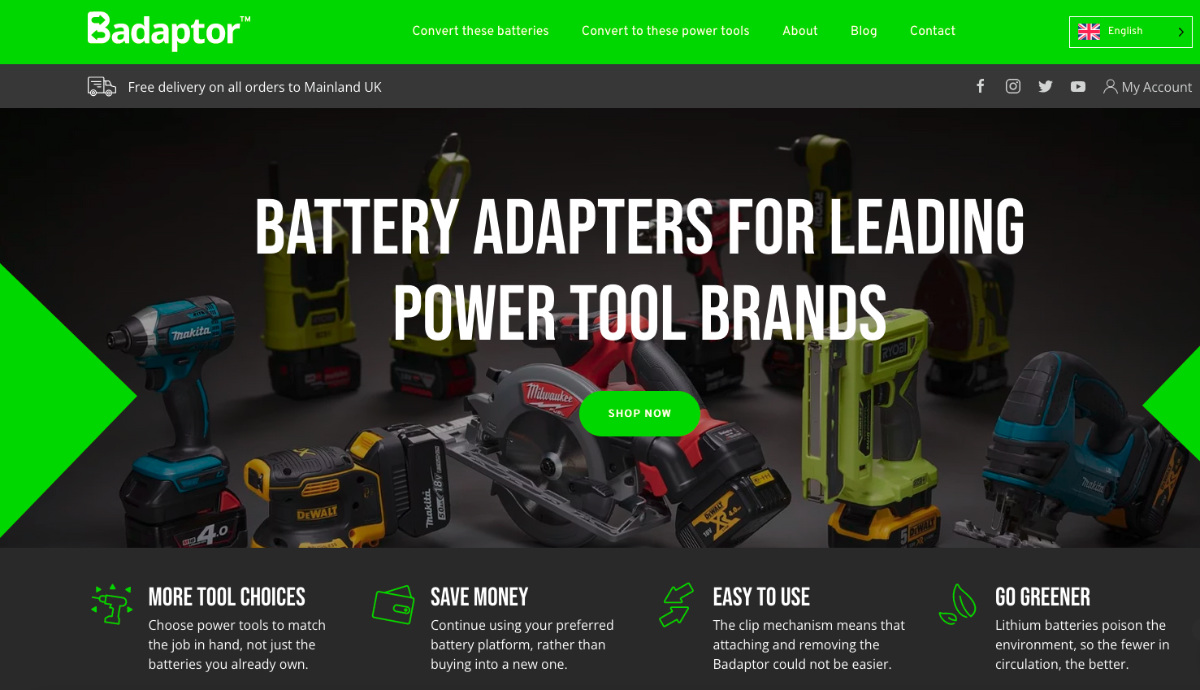
Even if you have absolutely no electronics or wiring skills, you can buy adaptors that allow you to either use a different branded battery or next-gen-but-same-brand battery with your existing tools... provided they're of similar voltage. Manufacturers like Badaptor, as well as certain industrial design students I know, are 3D printing their custom designed adaptors and selling it online.
I bought a 3D printed, fully wired adaptor that enables me to use new "next generation" Stanley batteries on my old Stanley cordless tools. It cost me 20 Australian dollars, and now the batteries that I got with my new Stanley tools can power my old ones.
Just make sure you are ordering the right adaptor, as the description may be a little confusing.
Both sides of an adaptor have to be correct! (Don't get it backwards)
It won't help you if you have a Makita tool set and you want to use DeWalt batteries... if the adaptor you ordered is for DeWalt tools (it won't plug into your Makita tools... or your Makita Batteries). Both sides of the adaptor have to be correct:
Or put another way....
Battery (male connector) > Adaptor's female socket (Select battery brand) > Adaptors male connector (Select tool brand) > Tool socket.
Have a look at Badaptor by clicking the image.
A more DIY approach to cordless tool battery adaptation
Honestly, at the end of the day, battery power, is all direct current (DC) and as long as the voltage of the battery and tool matches, it is pretty much the same no matter what the brand. If you can connect the right wires, with the right polarity (positive to positive, negative to negative) it should work.
Now some people with 3D printers, computer aided design (CAD) skills, and basic electronics knowledge will fabricate adaptors, or even remake parts of their tools with different connectors for whatever battery type they intend to use. Conversely, they print battery connectors and swap them out to suit the tools so there's no need for adaptors at all. That's a hugely technical way to go, and you don't have to go that far. There are simpler strategies, but will require some careful hacking of tools/batteries or even both.
WARNING: Lithium batteries do NOT respond well to being punctured, overheated, short circuited, etc. (Think fire and explosion) So make sure you know what you're doing, or ask for help from someone qualified to do so.
Some people crack open their old defunct batteries, and replace the lithium cells inside, basically "remaking" their old batteries. Some people buy cheap tools with plentiful, freely available batteries, and cut the tool's battery connector off, and wire + glue it to their old tools, allowing them to use new batteries. As seen in the video below.
The DIY "Hack Job" to make a cross-branded battery adaptor.
This is just the start.... see what other ways you can come up with!
All the best in your DIY!
Ham.